

A study analyzing trauma data found 8,715 cases of ocular trauma from firearm activities between 2008 and 2014. That works out to roughly four people per day losing or damaging their vision over a six-year span.
Your eyes are still medically irreplaceable. That is why eye protection is one of the most important pieces of range gear you can own.
We have all seen it at the range. A guy walks up to the line, drops his gear, runs a full mag, and the entire time his eye protection is sitting on top of his hat like a fashion accessory. Maybe you have even been that guy. No judgment.
But here is the reality: one catastrophic second is all it takes. A ricochet, a hot piece of brass, a powder burn, or a serious malfunction can damage your eyesight before you even register what happened.
The risk is real, and the fix costs less than a box of ammo. Let’s break down everything you need to know about shooting eye protection, including impact ratings, lens tints, prescription options, and long-term care.
- Why Eye Protection at the Range Is Non-Negotiable
- Understanding Eye Protection Impact Ratings
- Types of Shooting Eye Protection
- Shooting Glasses Lens Tints Explained
- Eye Protection for Prescription Lens Wearers
- How to Clean and Maintain Your Shooting Glasses
- Quick Tips for Shooting Eye Protection
- FAQ
Why Eye Protection at the Range Is Non-Negotiable
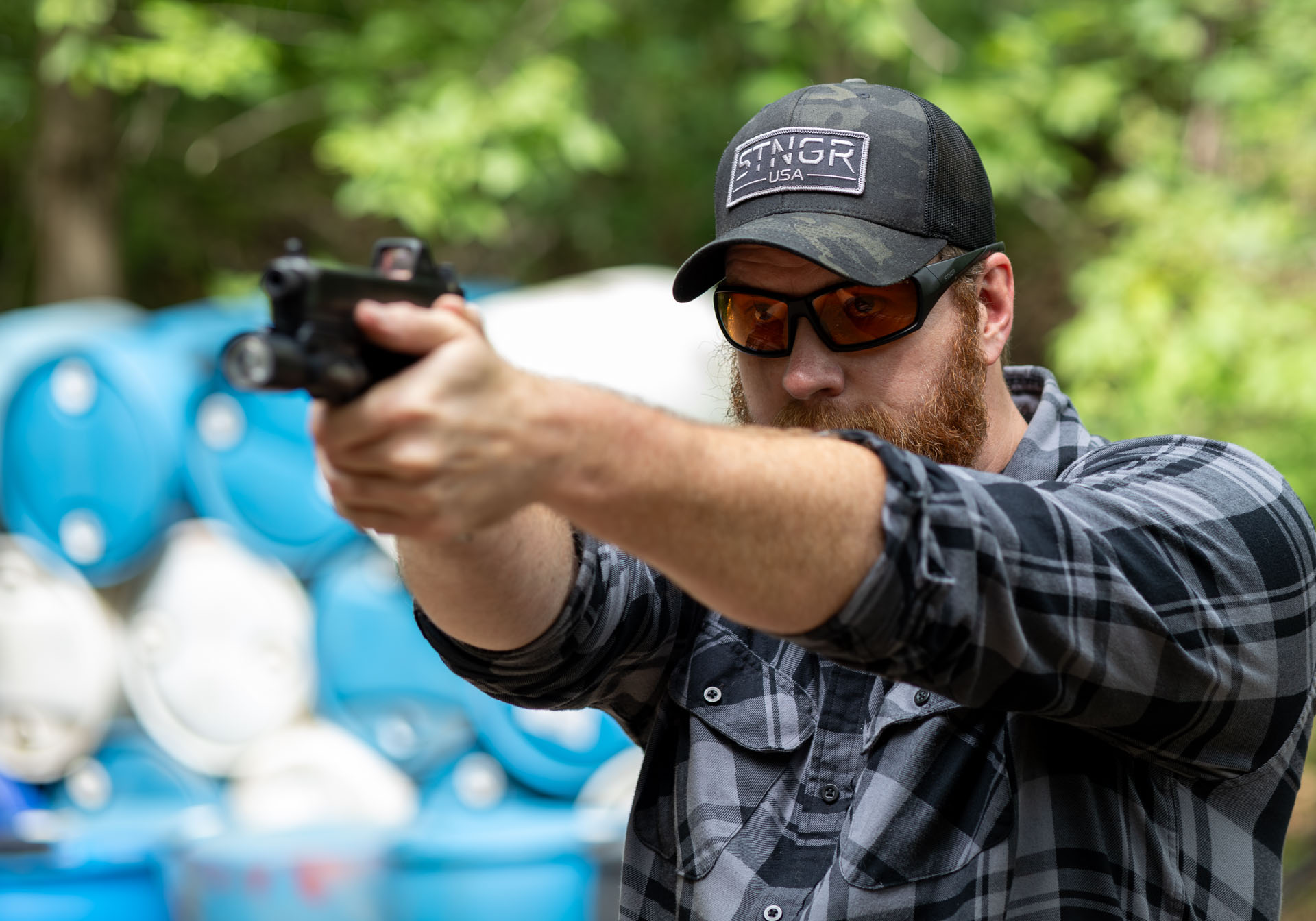
The range is not hazardous in the way most people think about it. It is not only the firearm in your hands that can threaten your eyes. It is everything happening around it.
Fragmentation catches a lot of shooters off guard. When a bullet contacts a steel plate at a slightly off angle, the round can fragment and spall. It does not just stop. Shards of copper jacket and lead can spray outward at high speeds, and they do not always travel in predictable directions.
Concrete backstops can behave the same way. Your target does not even need to be the source. The person shooting next to you can send debris into your lane without either of you doing anything wrong.
Hot brass and gas are more common than fragmentation, but they are also commonly ignored. An ejected case from a neighboring shooter’s semi-auto can hit you in the face with enough heat to cause an immediate reaction or burn. Gas blowback from a malfunction can do the same thing even faster.
Then there are the malfunctions themselves. A squib followed by a second round, a case head separation, or a catastrophic malfunction can send metal in several directions, including back toward your face. These events are rare, but when they happen, the injuries can be life changing.
This is why your range safety officer carries extra safety glasses. It is not just a formality. It is because they have either seen what can happen or know someone who has.
Understanding Eye Protection Impact Ratings
Impact ratings are what separate real eye protection from glasses that only look the part. Here is what the markings mean and why they matter.
ANSI Z87.1: The Baseline Standard
ANSI Z87.1 is the minimum standard for occupational eye protection. At a minimum, this is the rating you should look for at the range.
The basic ANSI test includes a low-energy impact test. Most ranges will accept this rating, but it is the floor, not the ceiling.
ANSI Z87+: High-Impact Protection
For shooting, look for the Z87+ mark. The plus sign means the eyewear passed a high-impact test. This is what most ranges want to see for live-fire use.
The Z87 or Z87+ rating should be marked directly on the lens or frame. It should not just be on a sticker. If you cannot find the marking, borrow a pair from the range safety officer until you can verify what you have.
MIL-PRF-31013: Ballistic-Rated Military-Grade Protection
For shooters who want a higher level of protection, MIL-PRF-31013 is a military ballistic eyewear standard. This type of eyewear is designed for more serious fragment protection and usually uses thicker polycarbonate lenses with more complete coverage.
Key markings and specs to look for may include:
- MIL-PRF-31013 markings on the frame or lens
- V50 ratings, which relate to fragment penetration velocity
- V0 limits, which indicate no penetration at tested speeds
EN 166: European Ballistic Standard
EN 166 is the European standard for eye protection. An “F” marking indicates resistance to higher-energy fragments, though it is not the same as MIL-PRF-31013. If you are buying eyewear from an international brand, this is a standard you may see.
Types of Shooting Eye Protection
Basic Safety Glasses
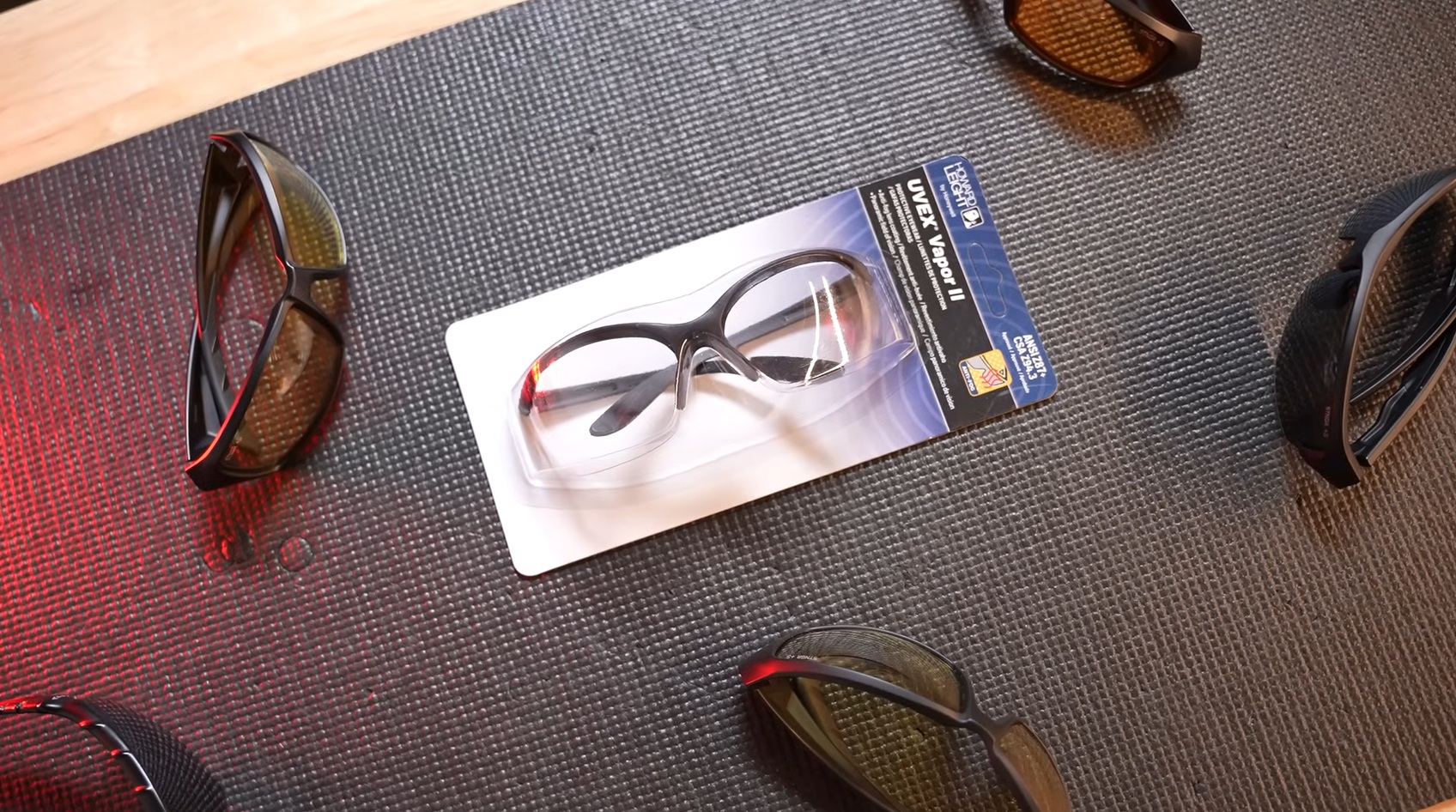
Basic safety glasses are the workhorses of the range. They are usually made from polycarbonate, they are affordable, and they are what most beginners reach for first.
They are also ideal as backups and loaners. Someone will always forget a pair, and there is a good chance that person will “accidentally” take yours home if you only brought one set.
Look for the Z87+ rating, grab a multi-pack, and toss a few extras in your range bag. Basic safety glasses are easy to find, and they are usually very affordable.
If you are getting started or need extra pairs for your range kit, browse AT3’s eye protection selection.
Wrap-Around Shooting Glasses
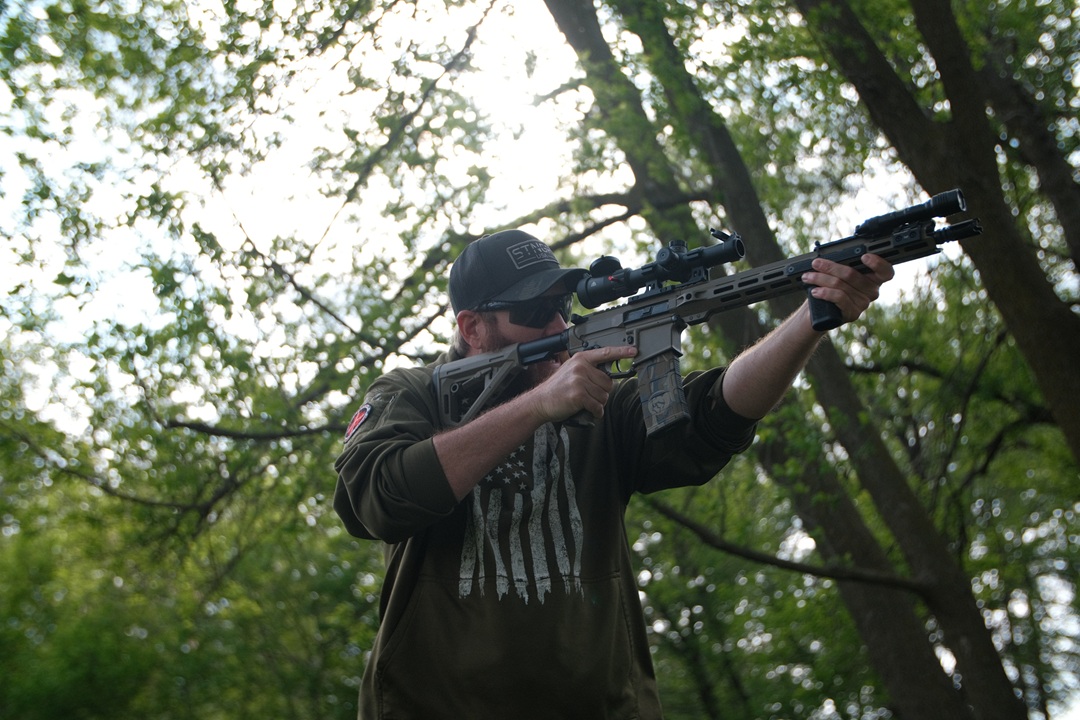
This is where form meets function. Over the past decade, brands like Oakley, Wiley X, ESS, Gatorz, STNGR, and others have made everyday-style sunglasses that also carry real safety ratings.
You get the same kind of protection you need at the range, but with better comfort, better coverage, and a less “hardware store safety glasses” look.
Wrap-around shooting glasses usually offer better side protection. They also tend to stay in place better when you are moving, sweating, or shooting outdoors.
Many better shooting glasses also include useful features like anti-fog coatings, interchangeable lenses, and everyday wearability. That last part matters. If your range glasses are comfortable enough to wear all day, you are more likely to actually keep them on.
AT3 carries options like the STNGR Ridge Ballistic Glasses and STNGR Hi-Speed Ballistic Sunglasses. You can also check out the shooting glasses we carry to find the right fit for your setup.
Shooting Glasses Lens Tints Explained
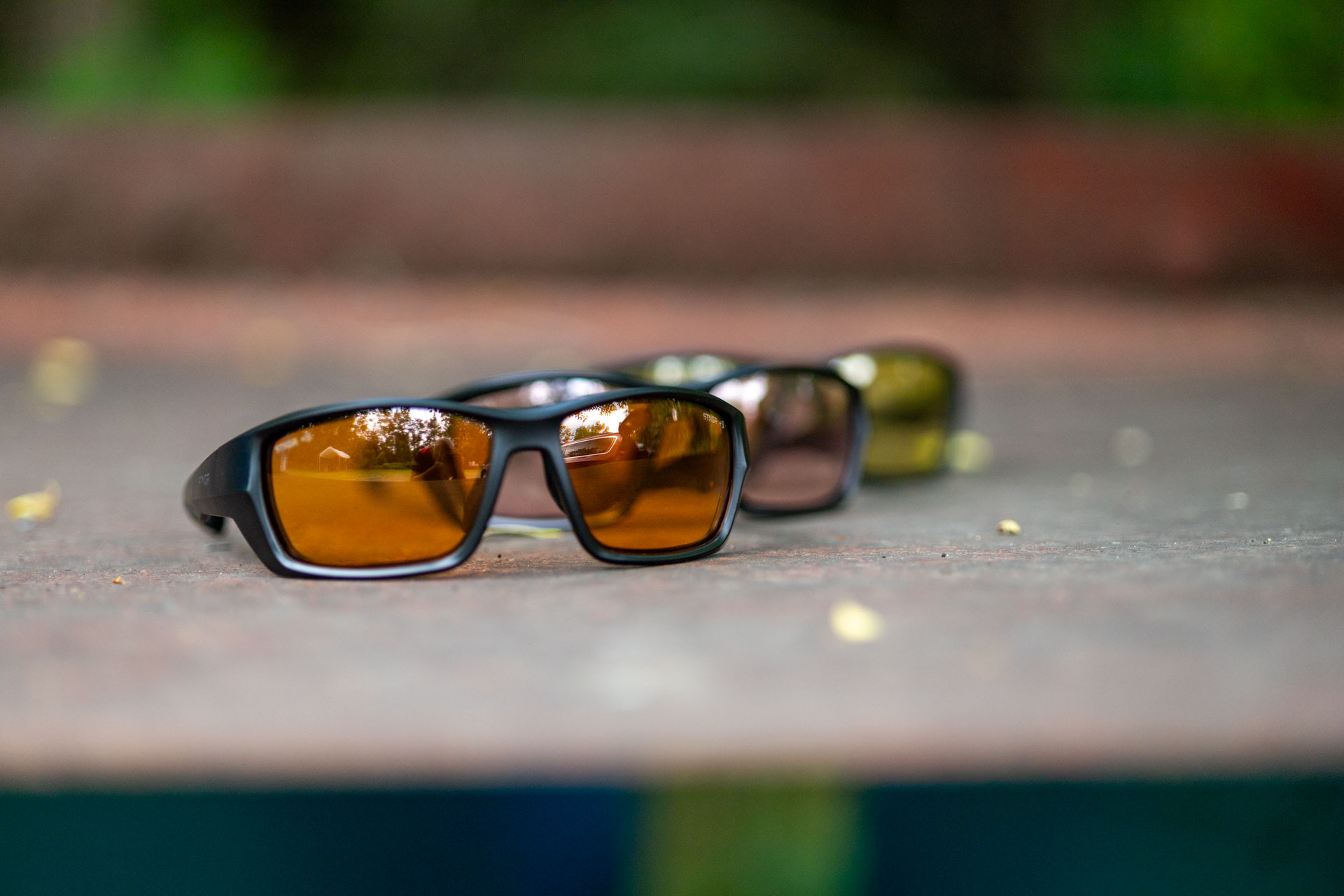
Lens tint is misunderstood in the shooting world. A tint does not make you a better shooter. It simply helps reduce the visual strain between your eyes and the lighting conditions you are shooting in.
The wrong tint in the wrong environment can make things worse. Every shooter’s eyes are different, so treat the guide below as a starting point, not a rulebook.
Clear Lenses: Light Transmission 85–90%
Clear lenses are the default choice for indoor ranges and low-light shooting. They do not change what you see. There is no color shift, no contrast trick, and no extra darkening in a shooting bay that is already dim.
Clear lenses are also the most important backup tint to keep in your bag. Conditions change, and a spare pair of clear lenses can save a range day.
Yellow or Amber Lenses: Light Transmission Around 80%
Yellow and amber lenses filter out blue light, which can sharpen contrast between targets and backgrounds in flat, overcast, or low-light conditions.
They can make greens and browns pop and help target edges stand out. That is why many hunters and competition shooters like them for early morning, evening, or cloudy conditions.
The downside is bright sunlight. Yellow lenses can feel harsh and tiring on a clear summer afternoon, especially at a reflective outdoor range.
Rose or Vermillion Lenses: Light Transmission 20–40%
Rose lenses are a love-it-or-hate-it option. They can improve depth perception and target contrast in variable light. That makes them popular with some clay shooters and 3-gun shooters who track fast-moving targets against changing backgrounds.
Some shooters pick up orange clays faster with rose lenses. Other shooters feel like the tint throws off their sight picture. This is one tint you should try before you buy if possible.
Gray, Smoke, or Dark Lenses: Light Transmission 15–25%
Gray and smoke lenses are the workhorses for bright outdoor shooting. Think of them like regular sunglasses. They cut light without changing colors too much.
They are a strong option for sunny outdoor ranges, snow, or any place where glare and brightness are the main problem.
Interchangeable Lenses
If you shoot in different conditions, interchangeable lenses are worth considering. They let you swap tints based on light, weather, and the type of shooting you are doing.
That is where interchangeable lens systems like the Magpul Helix can be useful. You can keep one frame and change lenses as needed.
Polarized Lenses: Know the Trade-Offs
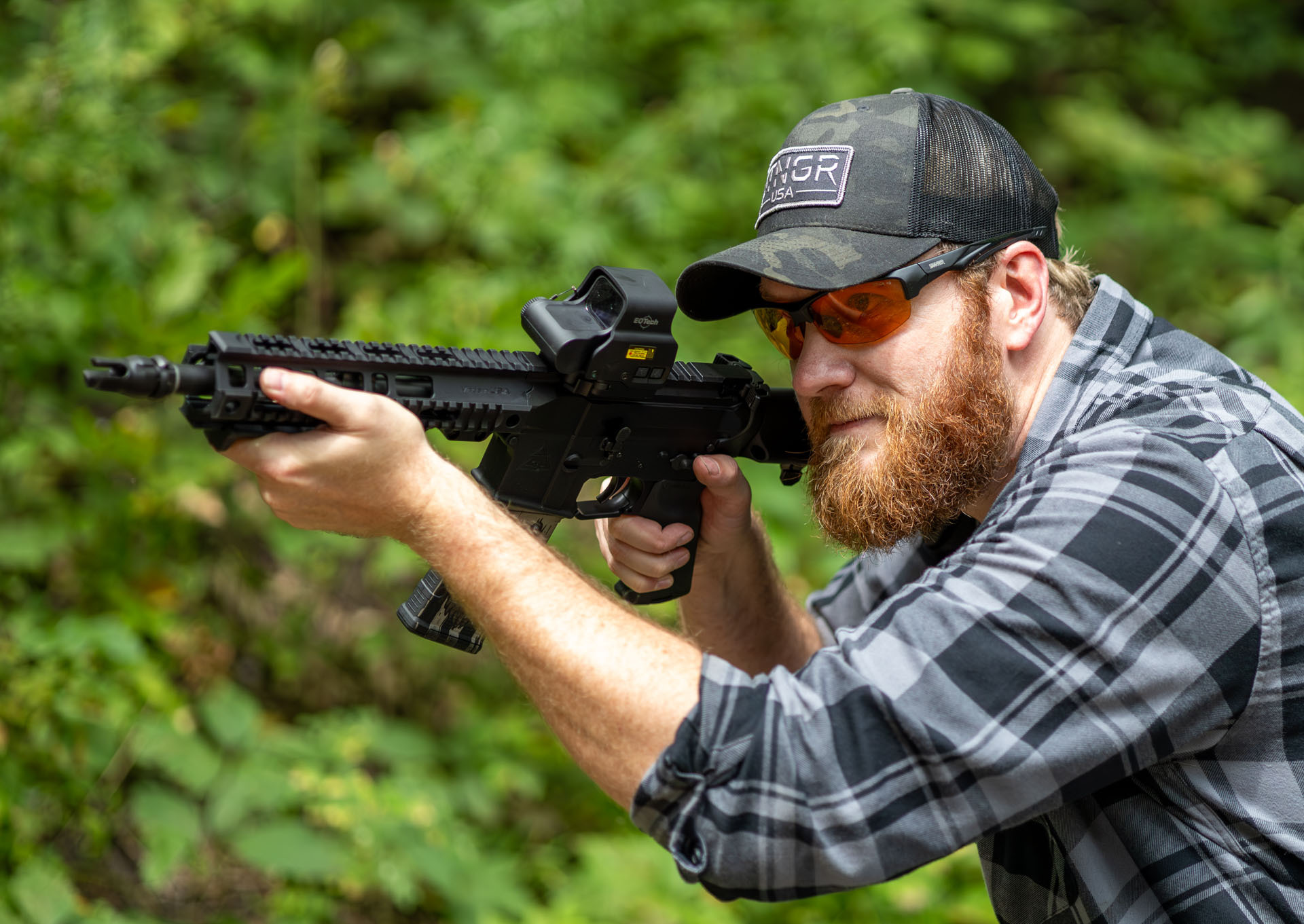
Polarized lenses block certain light waves that create glare from flat reflective surfaces. In the right environment, that is helpful. Lakeside ranges, wet steel, snow, and bright outdoor shooting are all places where polarized glass can make sense.
The problem is optics compatibility. Some red dot sights, holographic sights, and even some scopes can look dim or black out when viewed through polarized lenses.
LCD shot timers, range electronics, and phone screens can have the same issue.
Run polarized lenses with your actual setup before you trust them on the line. If you are not sure, keep a non-polarized clear pair in your bag.
Eye Protection for Prescription Lens Wearers
If you wear corrective lenses, the range creates a problem that non-prescription shooters do not have to think about.
Your regular glasses are not usually rated for impact. Most ranges will not accept them as eye protection. Wearing safety glasses over your frames can also be uncomfortable, especially if your frames are wide or do not fit well under fit-over glasses.
You have three real options.
Clip-On Polycarbonate Inserts
Clip-on polycarbonate lenses are the budget option. They attach to your existing frames and add a layer of impact protection.
They are affordable and can work in a pinch. The limitation is coverage. Your prescription frames were not designed for side protection, so clip-ons do not give the same wraparound shield as purpose-built shooting glasses.
For casual range use or as a backup, they can work. As a primary solution for regular shooters, they are a compromise.
Over-Glasses or Fit-Overs
Fit-over safety glasses are ANSI-rated glasses designed to go over your prescription frames.
The coverage is better than clip-ons because you get a full shell over your normal glasses. The downside is bulk. They can feel heavy, sit awkwardly, and interfere with the seal on your hearing protection.
If you only shoot a few times a year, fit-overs can be a reasonable low-cost answer. If you shoot often, the comfort issues may get old fast.
Prescription Shooting Glasses
Dedicated prescription shooting glasses are the best long-term answer for regular shooters.
Brands like Oakley, Wiley X, and Gatorz offer options where your prescription is built into rated lenses and frames designed for range use. You get protection, coverage, and eyewear that actually fits correctly.
If your preferred frame does not offer a direct prescription option, lens replacement services may be able to install ANSI-compliant prescription lenses into frames you already own.
How to Clean and Maintain Your Shooting Glasses
A compromised pair of shooting glasses is not just annoying. It can give you false confidence.
A lens full of micro-cracks, pitting, or deep scratches may look fine until it needs to stop an impact. Proper care helps your rated protection actually perform when you need it.
Cleaning
The enemies of quality lens coatings are alcohol, abrasion, and heat. Many household glass cleaners contain alcohol or ammonia, which can break down anti-fog and anti-scratch coatings over time.
Use a lens-safe cleaner instead. A non-alcohol formula made for coated optics is a better choice.
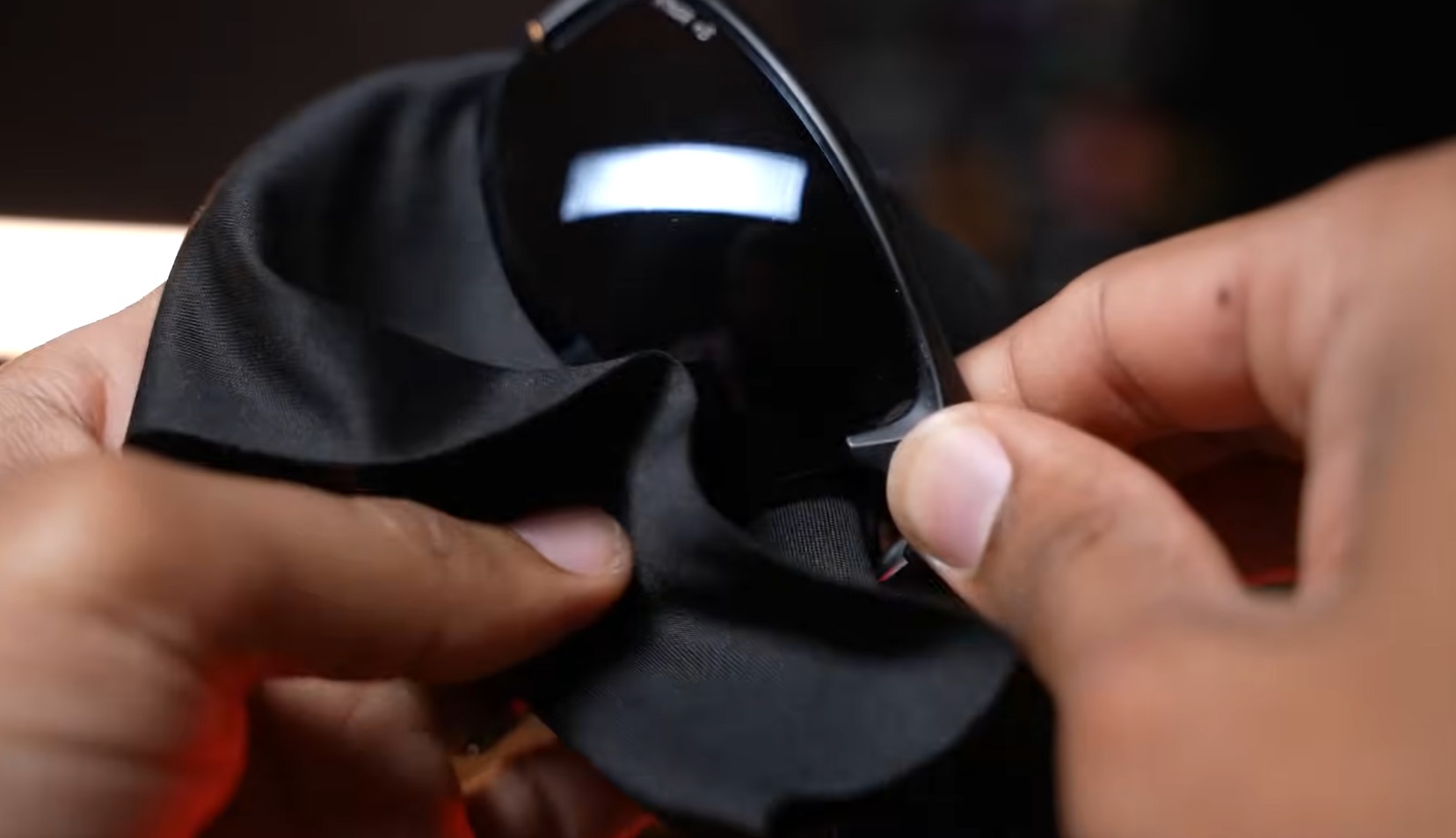
The technique matters too. Mist the lens lightly, then wipe in slow circles from the center outward. Do not drag debris side to side across the lens. That can create micro-scratches.
Buff dry with a clean microfiber cloth when you are done.
Storage
Most lens damage does not happen while shooting. It happens in your range bag, your truck, or your cup holder.
Glasses left loose in a range bag can rub against magazines, tools, ammo boxes, and other hard gear. That damage adds up quickly.
Use the case your glasses came with. If you lost it, get a hard shell case. A microfiber bag inside a case is even better.
And yes, the top of your head is not a proper storage location either.
Inspection
Your ANSI rating only applies to an intact lens. A cracked or pitted lens that still looks wearable may be one of the most dangerous pieces of gear in your bag because it gives you confidence it may not deserve.
After every range session, inspect your lenses. Hold them up to a strong light source and tilt them at different angles. Hairline cracks and spiderweb patterns may not show straight-on, but they can catch light at an angle.
For pitting, gently run your fingernail across the lens surface. If it snags or catches, the lens has surface damage. Pitting creates weak points that can reduce impact resistance.
When to Replace Shooting Glasses
Replace your shooting glasses every one to two years with regular use. Replace them immediately after any impact that visibly stresses the lens, regardless of age.
You should also replace them immediately if you find cracks, pitting, deep scratches, or anything beyond light surface wear.
One more thing: reading glasses do not count as range eye protection. If you are using readers at the range and telling yourself they are good enough, they are not. Grab a pair of Z87+ safety glasses and wear them.
Quick Tips for Shooting Eye Protection
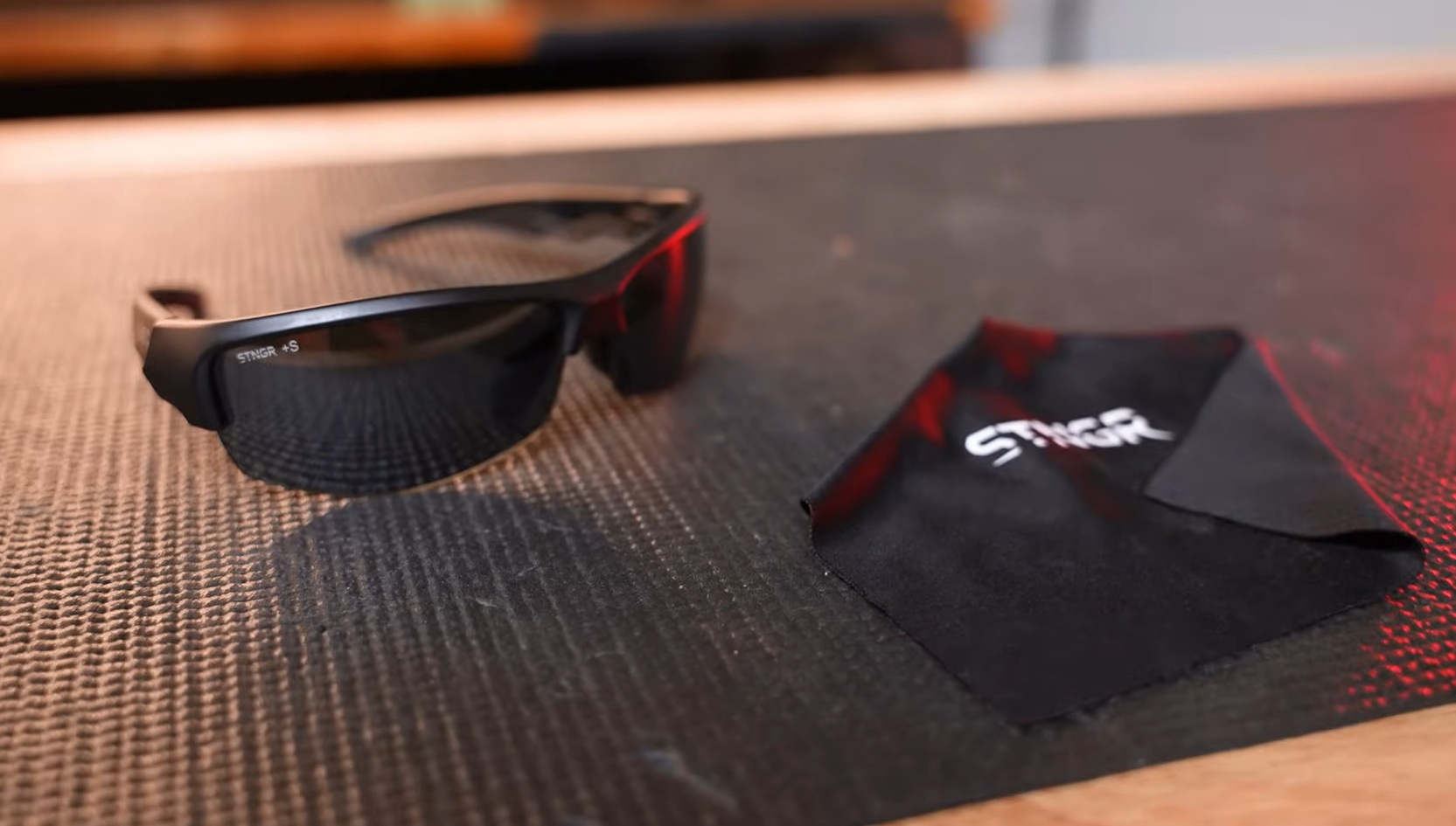
Pack extras like ammo. Keep 2–3 pairs in your range bag and stash a microfiber cloth with them. Someone will always forget theirs, and if your main pair fogs up or gets dirty, you want a backup ready to go.
Budget does not mean bogus. A basic Z87+ pair can stop range debris. Premium eyewear usually earns its price through comfort, anti-fog performance, optical clarity, and durability, not because cheap Z87+ glasses are useless.
Verify the etching, not the sticker. Real safety certification should be marked on the lens or frame. A sticker is not enough.
Test polarized lenses with your actual optics. Do not find out your dot goes dark during a drill, class, or match. Test at home first and keep a non-polarized backup pair in the bag.
FAQ: Shooting Glasses and Eye Protection
What ANSI rating do I need for shooting glasses?
At minimum, look for ANSI Z87+. The plus sign means the lens passed the high-impact test that most ranges require. Basic Z87 without the plus only passes a lower-energy test and is not the best choice for live-fire environments. Look for the rating marked directly on the lens or frame, not just printed on a sticker.
Can I wear regular sunglasses at a shooting range?
No. Standard sunglasses, even expensive ones, are not the same as shooting glasses. They are not built for high-impact protection and may not carry an ANSI Z87+ rating. Regular sunglass lenses can shatter on impact and become a hazard themselves. If you want eyewear that works as both sunglasses and range glasses, choose glasses that are properly impact rated.
Do my prescription glasses count as eye protection at the range?
Almost certainly not. Standard prescription frames and lenses are not usually tested or rated for impact protection. Better options include fit-over safety glasses, prescription inserts inside ANSI-rated frames, or dedicated prescription shooting glasses with impact-rated lenses.
Are polarized shooting glasses good for range use?
It depends on your setup. Polarized lenses can be great outdoors when glare is a problem, especially around water, wet steel, or bright reflective surfaces. The downside is that polarization can interfere with optics. Red dots, holographic sights, some scopes, LCD timers, and phone screens can dim or black out. Test polarized glasses with your actual gear before relying on them.
What lens color is best for shooting glasses?
There is no single best lens color. Clear lenses are best for indoor ranges and low light. Yellow or amber lenses can boost contrast in cloudy or dim conditions. Gray or smoke lenses are best for bright outdoor light. Rose or vermillion lenses are popular with some clay and competition shooters. Lens tint is personal, so try different options if possible.
How often should I replace my shooting glasses?
Replace your lenses every one to two years with regular use, or immediately after any impact that visibly stresses the lens. You should also replace them if you find cracks, spiderweb patterns, deep scratches, or pitting. The safety rating only applies when the lens is undamaged.
Do I need eye protection at an indoor shooting range?
Yes. Indoor ranges still have ricochets, hot brass, gas, airborne debris, and lead particulate. Clear lenses are usually the best choice indoors because they do not darken your view or change color perception in lower-light bays.
What is the difference between ANSI Z87+ and ballistic-rated eyewear?
ANSI Z87+ is the common civilian high-impact standard and is what most ranges require. Ballistic-rated eyewear, such as eyewear meeting MIL-PRF-31013, is tested to a higher standard for fragment protection. For most civilian range use, Z87+ is appropriate. Ballistic-rated eyewear is worth considering for military, law enforcement, competition, or higher-risk use.
Final Thoughts
Shooting glasses are one of the easiest safety upgrades you can make. They are affordable, simple to pack, and can prevent injuries that are impossible to undo.
Choose eyewear that fits well, carries the right safety rating, works in your lighting conditions, and does not interfere with your optics. Keep backups in your range bag and replace damaged lenses right away.
Ready to upgrade your range safety kit? Shop all eye and ear protection at AT3 Tactical.
Want to cover the rest of your range safety setup? Read our complete guide to hearing protection for shooters.
One Last Tip
If there’s anyone that knows the AR-15 platform, it’s the US military. As a special offer for our readers, you can get the Official US Army Manual for AR-15/M4/M16 right now – for free. Click here to snag a copy.