
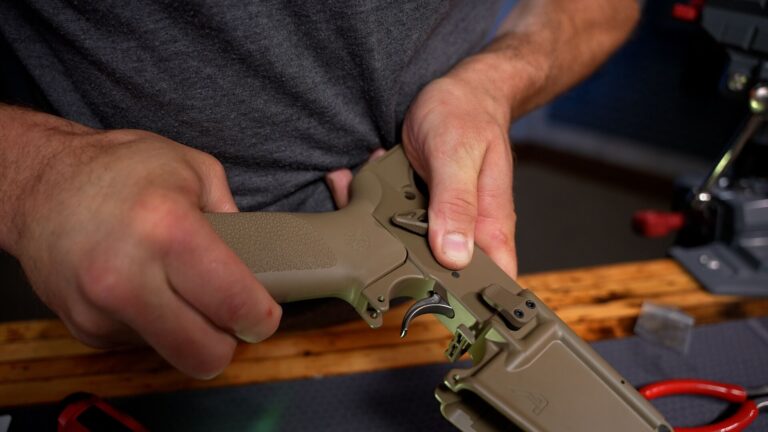
A stock A2 grip will run the rifle. It just doesn’t do much else. After that, you’re shopping for a hold: rubber or hard polymer, 25 degrees or something much steeper, finger grooves or a clean front strap, storage in the box or a plug you add later.
There isn’t a universal best AR-15 pistol grip. The right one is the one that matches how you run the gun and what you actually want in the package. Specs help you shortlist. Your hand still has to sign off.
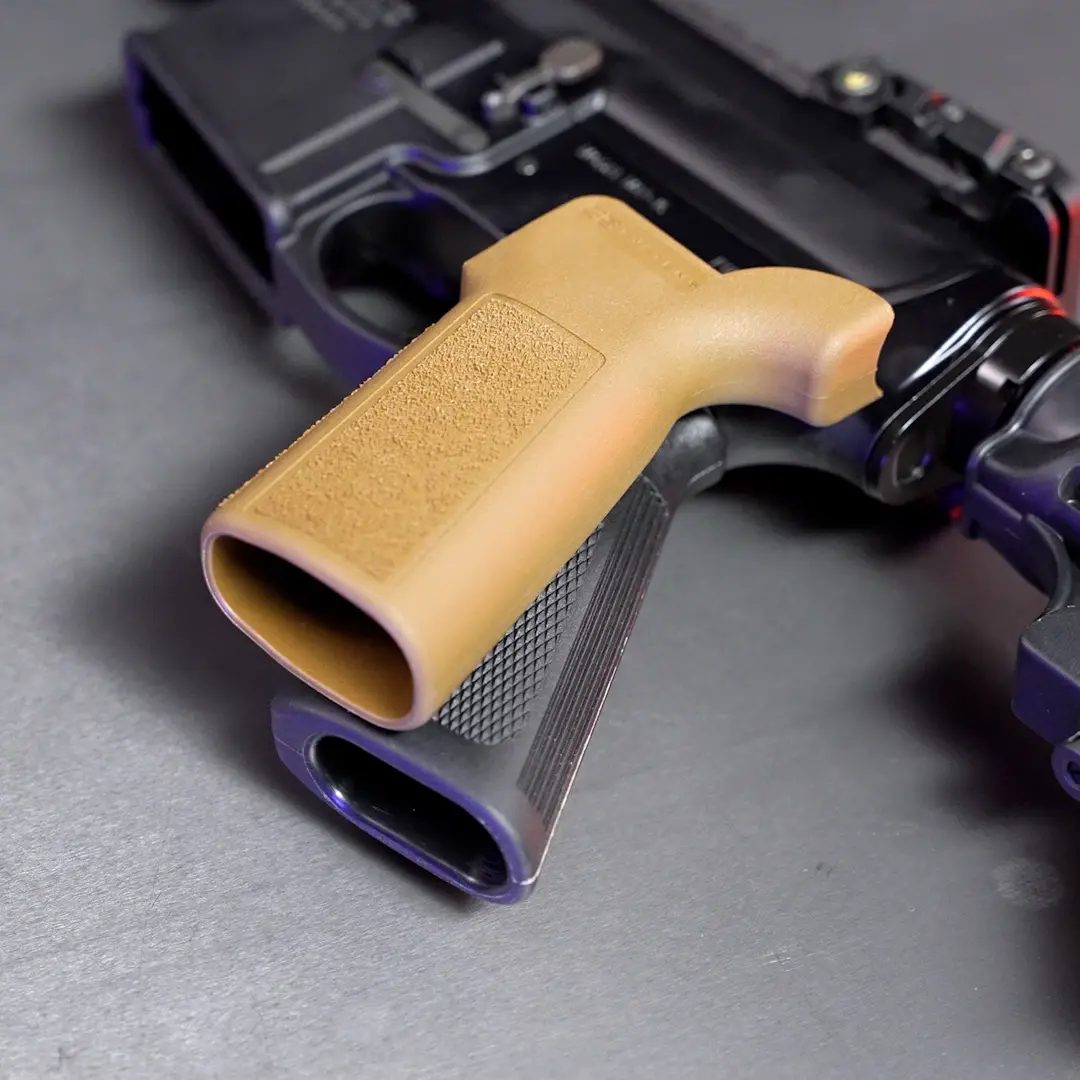
This comparison looks at five grips we sell and put on rifles in the shop:
- Magpul MOE (MAG415) for the familiar 25-degree polymer baseline
- Hogue OverMolded 15020 for rubber, cobblestone texture, and finger grooves
- B5 Type 23 P-Grip for a 13-degree duty grip with an extended tang
- Die Free Co Kung Fu Grip for a 12-degree nylon grip with a single finger recess
- Mission First Tactical ENGAGE EPG16 for a traditional angle with storage included
We’ll also flag the close siblings where they matter, like Hogue’s groove-free 15030, B5’s Type 22, and Magpul’s steeper K2. Those are useful forks. They’re not the primary picks here.
If you already know you want rubber, a steep angle, or a place to stash batteries, skip to that section. If you don’t, start with how these grips differ in material, shape, and what’s in the box, then pick the job before you pick the logo.
1. Magpul MOE: The 25-Degree Baseline
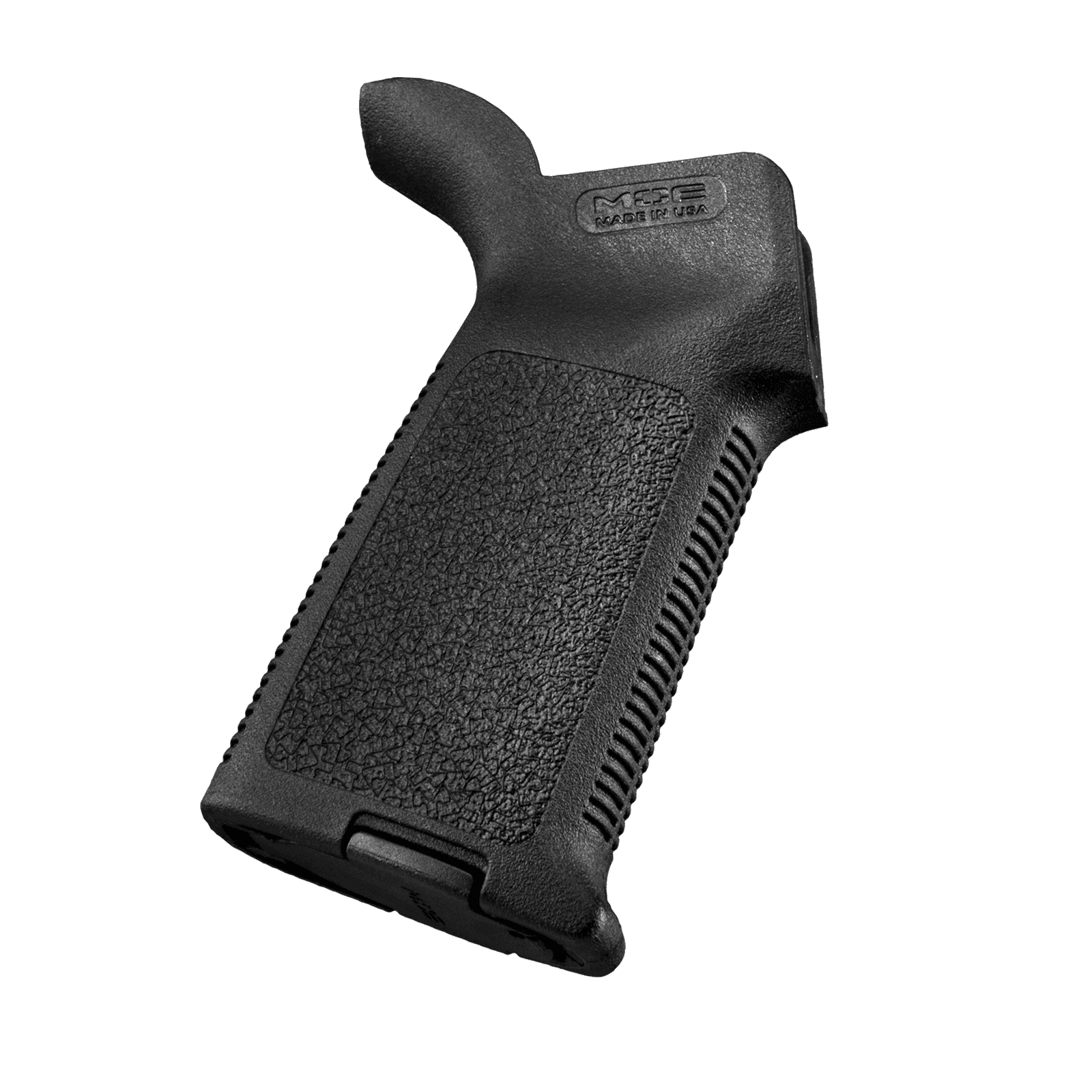
The MOE is the reference grip on this list. If you know an A2, you already know this angle. Magpul MAG415 is a one-piece reinforced polymer grip with a beavertail, textured sides, and ridged front straps, not full finger grooves. Magpul publishes a 25-degree angle, 4.0 inches from receiver to bottom, 1.2 inches at its thickest, and 2.8 ounces with hardware. Those numbers match what we see on the bench.
It ships with a basic grip cap and mounting hardware, so a fresh build isn’t waiting on a screw the way a Hogue OverMolded is. Optional Magpul Storage Cores drop into that same cavity if you want batteries or a lube bottle, but those cores cost extra. That’s the distinction versus the MFT ENGAGE, which includes a real storage plug in the box.
What you’re buying is the familiar hold, a huge color range, and a drop-in upgrade over a mil-spec M4 grip without changing how the rifle points. What you’re not buying is a steep angle or molded finger grooves. If you want Magpul’s more vertical take, that’s the MOE-K2 at 17 degrees. If you want to keep the A2-style finger ledge, MAG415 isn’t it, and that’s fine.
Same note Magpul prints for AR-10 / SR-25 lowers: some receivers leave a cosmetic gap behind the beavertail. It doesn’t hurt function.
2. Hogue OverMolded Beavertail: The Rubber-Surface Comparison
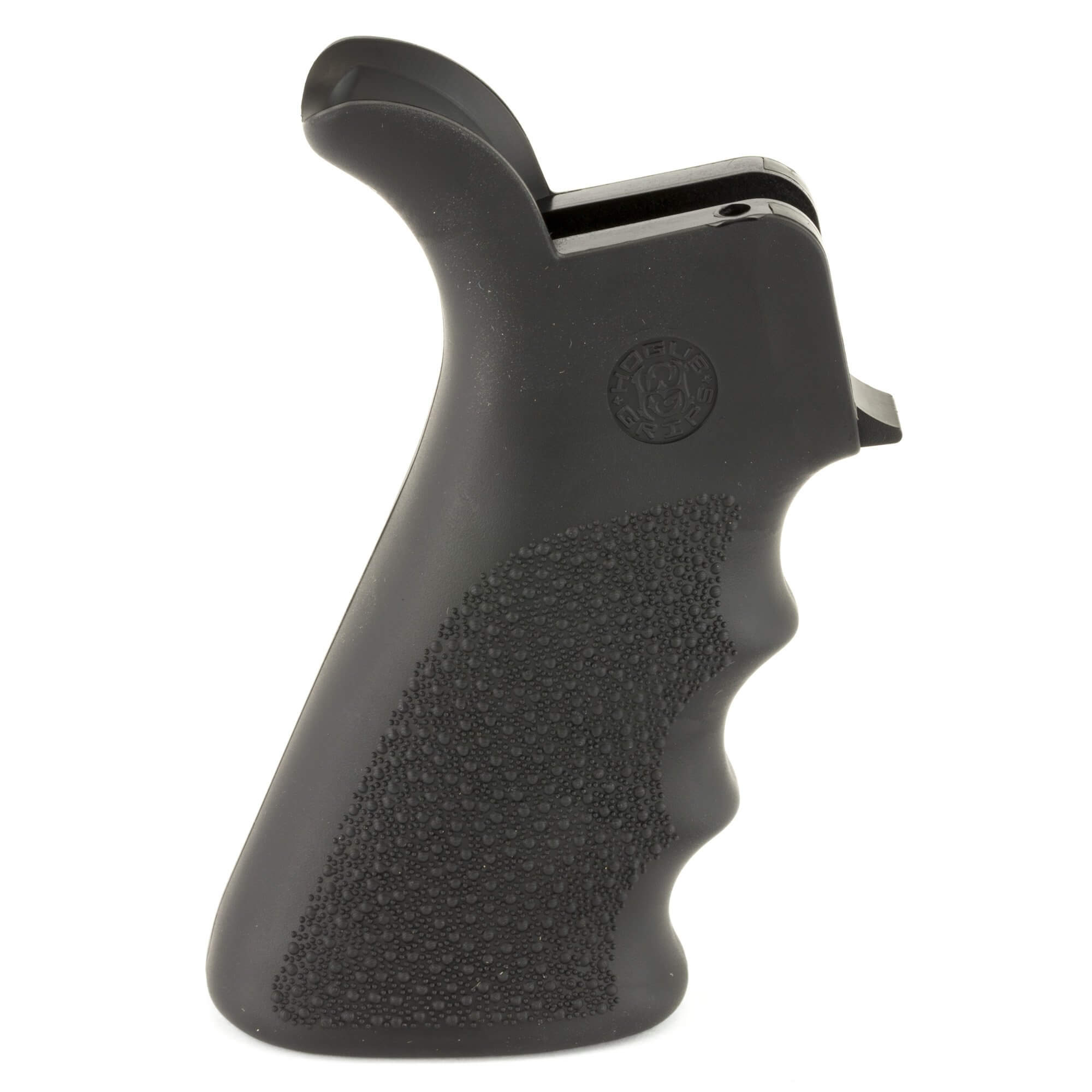
The Hogue is the clearest material contrast with the hard-surface grips here. We’re talking about the 15020: beavertail with finger grooves. That’s the common configuration versus Hogue’s groove-free 15030 or the modular kit.
Hogue identifies the exterior as a thermoplastic elastomer with cobblestone texture and publishes a 2.8-ounce weight. You can check Hogue’s specifications by clicking here.
It’s a bit more expensive than the Magpul MOE, but you’re getting a much different surface. The rubber stays planted in sweaty hands, and the molded contours with finger grooves let you keep a strong purchase. Hogue also has nine color choices, from standard black to lava red if you want the rifle to stand out on a competition line.
One thing to take note of if you go with the Hogue OverMolded: Hogue does not include a screw with the grip. If you’re doing a fresh build from scratch, add one to the order so you’re not stuck mid-install.
3. B5 Type 23 P-Grip: Extended Tang and a Steep Angle
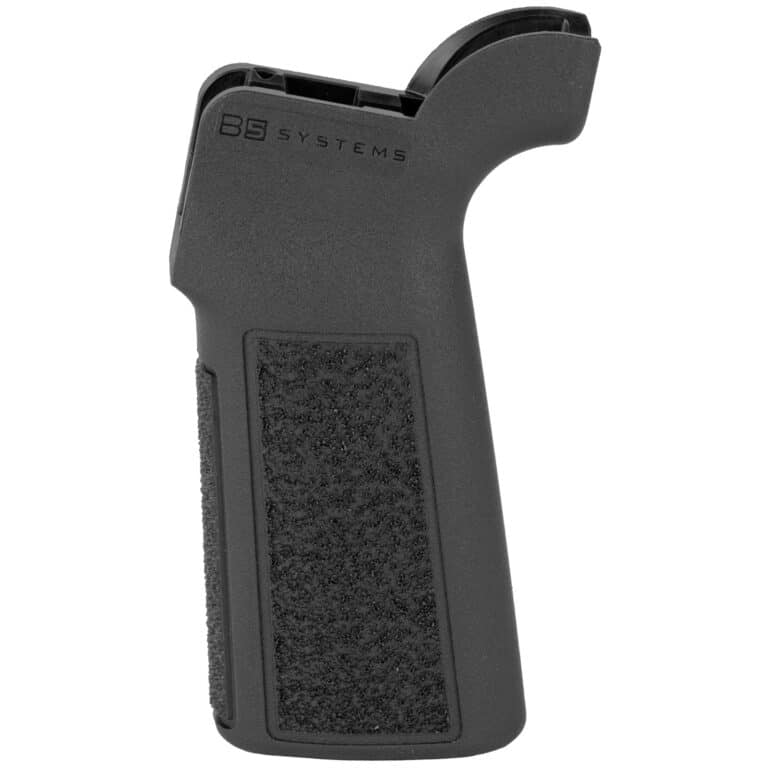
The B5 is the duty-standard steep polymer grip in this lineup. It sits at 13 degrees instead of the standard 25. The model here is the P-Grip 23 / Type 23, with the extended beavertail tang and a palm-filling profile that has no finger grooves. That’s the common pick versus B5’s Type 22, which drops the beavertail for a higher hold or for billet and non-standard lowers that don’t play well with a tang.
B5 lists the grip as MIL-SPEC polymer at 2.2 ounces, 2.73 inches long, with aggressive texture on the front strap and sides. You can check B5’s specifications by clicking here.
It usually sits at or under Magpul MOE money, and you’re getting a much more vertical hold than an A2 or standard MOE. Your wrist stays flatter, the trigger finger indexes more naturally, and you get less chicken-wing elbow. It’s not as upright as the Kung Fu’s 12-degree angle, and it skips the finger grooves. The trade is a taller tang, a slimmer midsection for control reach, and that B5 stipple. The color range is wide: black, FDE, coyote brown, OD green, wolf grey, MultiCam, MultiCam Black, and Woodland.
The P-Grip 23 accepts B5’s grip plug for a closed bottom or battery storage, but that plug is sold separately. The grip itself is a screwdriver drop-in and typically includes a mounting screw, so a fresh build isn’t waiting on hardware the way a Hogue OverMolded is. If you don’t want the beavertail, step to the Type 22.
4. Die Free Co Kung Fu Grip: A Distinct Angle and Finger Recess
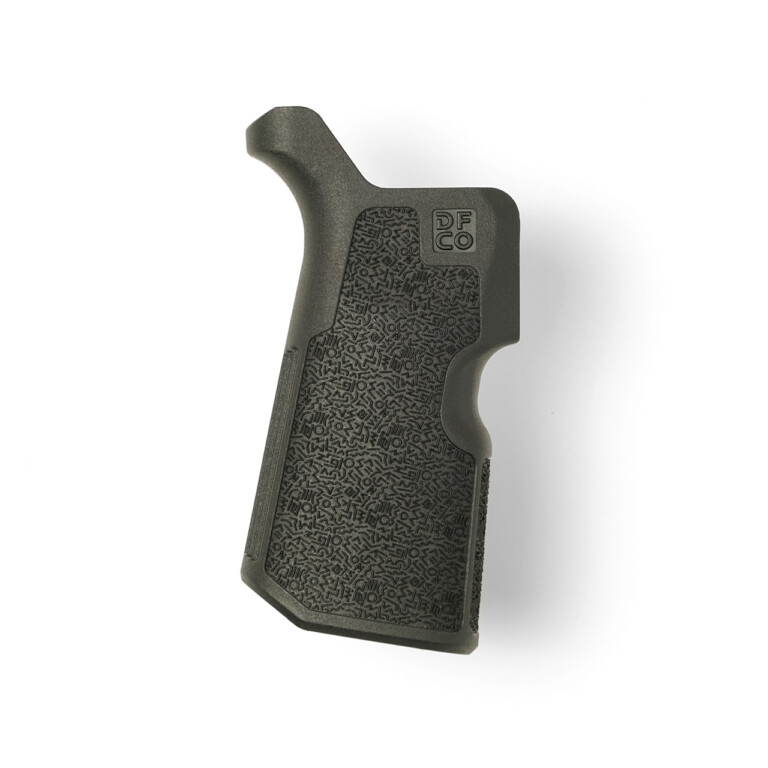
Die Free Co is the most vertical grip on this list, and it’s built around that on purpose. The Kung Fu Grip sits at 12 degrees, one degree steeper than the B5 Type 23, so the hand, wrist, and forearm line up instead of cocking back the way they do on an A2 or a standard Magpul MOE. Die Free’s pitch is a modern fighting posture: short length of pull, collapsed stock, prone, CQB. The enhanced finger groove is there to give you the same index every time and keep you from white-knuckling the rifle.
Construction is high-strength nylon with what Die Free calls a retro texture. No rubber overmold, no cobblestone, no B5-style stipple panels. We stock it in four colors: black (KFG-BLK), FDE (KFG-FDE), gray (KFG-GRY), and OD green (KFG-ODG). Weight lands around 2.4 ounces.
Against the Hogue, this is the opposite feel. Hard nylon instead of thermoplastic elastomer, a single groove instead of a full set of molded fingers, and a lot less sticky in the rain. Against the B5 P-Grip 23, the difference is subtler but real. The Kung Fu is a hair more upright, usually a bit shorter, and the groove plus thicker front section change where your trigger finger and support-side controls land.
Two practical notes. The bottom is open unless you add Die Free Co’s own plug, which is sold separately. That plug stores batteries or a small tool, adds about a quarter inch of length, and squares the back of the grip if you have larger hands. The grip works fine without it, and if you have a standard A2 grip, you’re already running an open bottom. Second, Die Free Co is upfront that some receivers will show a cosmetic gap between the tang and the lower. It doesn’t hurt function, but it can look unfinished on certain billet or non-standard receivers according to them. This is not a problem I have run into, and I have put this grip on dozens of rifles here at the shop.
5. Mission First Tactical ENGAGE EPG16: Included Storage and Standard Contours
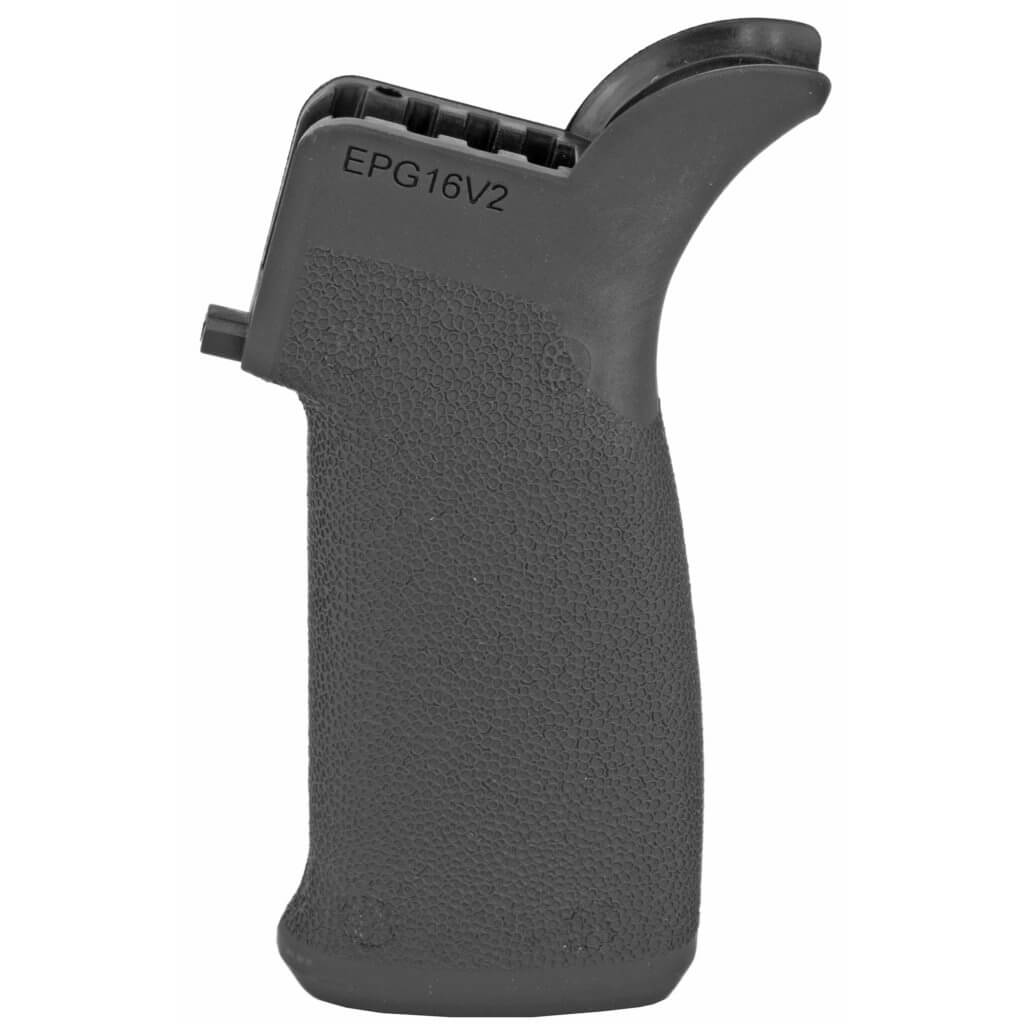
This one isn’t another steep-angle polymer grip. The EPG16 from Mission First Tactical stays closer to a classic M16 hold and puts the extras in the grip itself.
MFT lists it as polymer at 2.4 ounces, 4.804 inches tall, 1.22 inches wide, and 3.420 inches long. There’s a water-resistant storage compartment in the base with a retaining plug and a foam sled plus a quick-access tab so small parts don’t rattle.
You’re not paying Hogue money for rubber, and you’re not chasing the most vertical hold on the table. What you get is molded finger geometry, built-in storage that B5 and Die Free sell as a separate plug, and a more traditional grip angle that still beats a bare A2 on texture and comfort. This is a staple in the shop, and it’s one of our most common go-to grips when we want an upgrade that doesn’t have the Magpul logo on it.
Something you should know about this grip is that there is a removable tab at the front of the grip that interfaces with your trigger guard. You might need to remove this with a razor blade or a pair of wire cutters when you install it on your lower receiver, but it’s a very quick fix.
Materials, Comfort, and Value: What to Compare
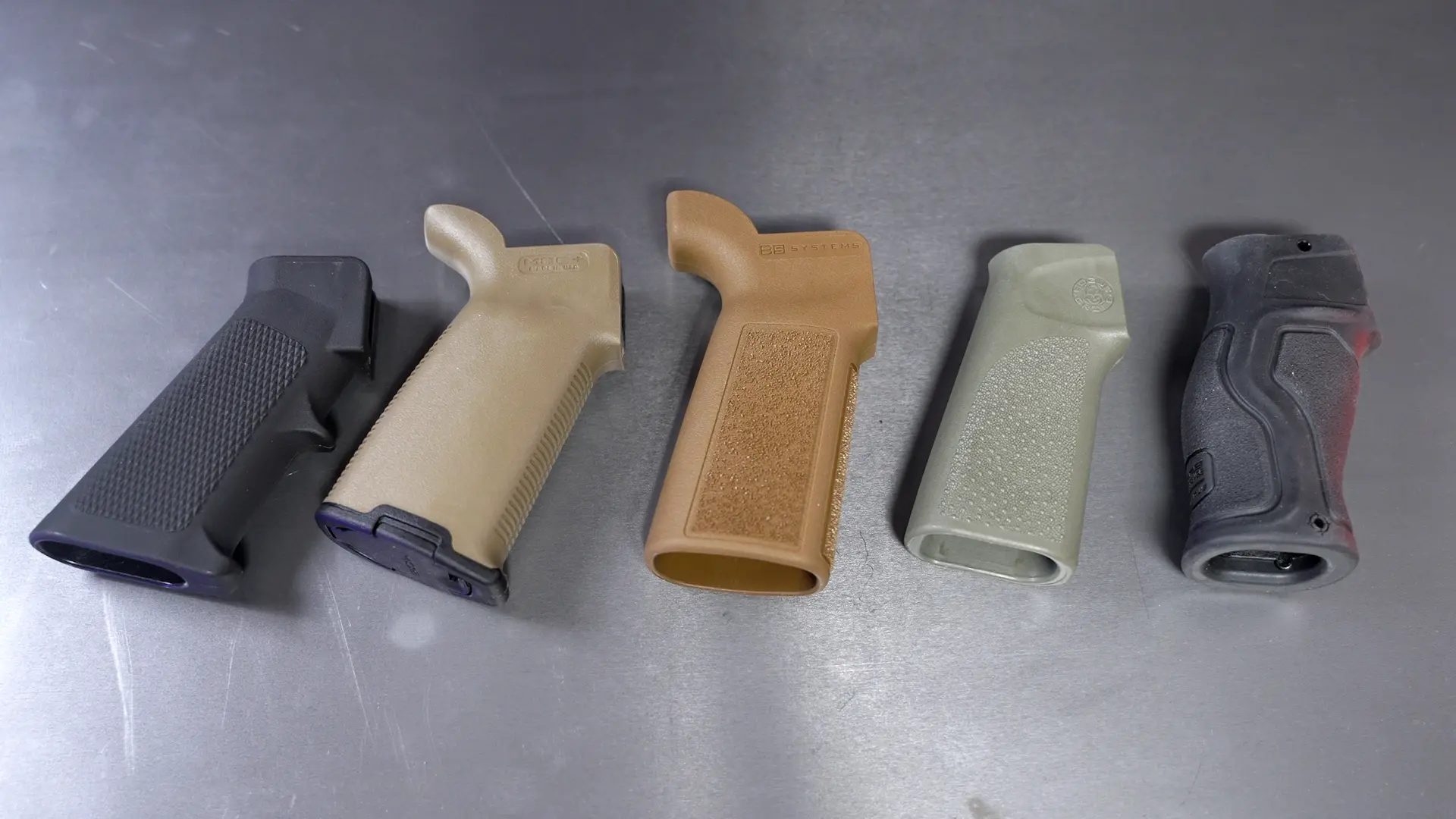
When you’re stacking these grips, separate the skin from the structure. Hogue’s rubber overmold sits on a rigid core. That’s a different feel from a hard polymer grip, even when both are textured. Nylon, which is what Die Free Co uses, is still a polymer. A stippled or retro surface is not automatically rubberized, and it won’t pick up sweat the same way a cobblestone overmold does.
Texture names are marketing, not a comfort scale. Cobblestone, stipple, retro, and Magpul’s anti-slip pattern all mean this is not a smooth A2. You still have to weigh that surface against finger grooves, palm swell, and how far the rear tang comes up into the web of your hand. The Kung Fu groove, the Hogue swells, the B5 tang, and the MOE’s plain front ridges change the hold more than the texture name does.
Watch the spec sheet too. Magpul publishes height from receiver to bottom. Other makers just say height. Those numbers may not start and end at the same points, so don’t pick a winner off a tenth of an inch in a table.
Value is the package you actually want, not the lowest grip-only price. The MOE includes a basic cap and takes optional cores. B5 and Die Free Co leave the bottom open unless you buy their plugs. MFT puts storage in the box. Hogue skips the screw. A cheaper grip that needs a plug, a screw, or a core you were already planning to add is not cheaper anymore.
If you want the familiar 25-degree hold and a huge color list, start with the MOE. If you want rubber and grooves, it’s the Hogue. Steep polymer with a full tang is the B5 Type 23. Steeper still, with a finger recess, is the Kung Fu. Traditional angle plus storage included is the EPG16. Pick the job, then the grip.
One Last Tip
If there’s anyone that knows the AR-15 platform, it’s the US military. As a special offer for our readers, you can get the Official US Army Manual for AR-15/M4/M16 right now – for free. Click here to snag a copy.