
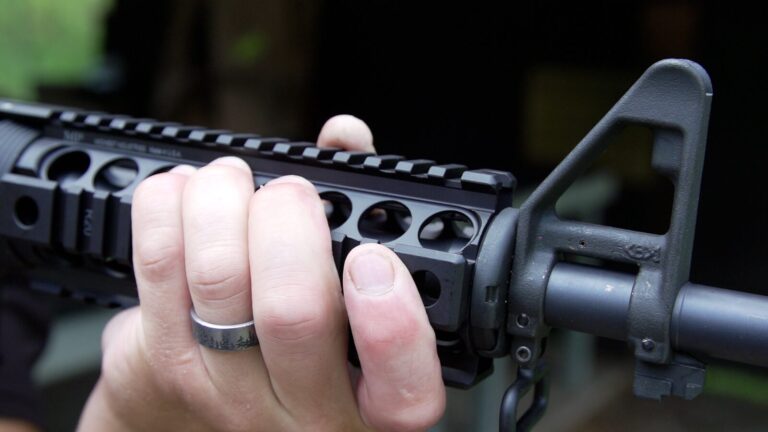
Want to upgrade your AR-15’s handguard without a toolbox or a fat wallet? Drop-in handguards are your answer. A lot of people assume a handguard swap means wrestling with tools or dropping big bucks on a free-float setup.
Wrong.
Drop-in handguards can be cheap, snap on and off fast thanks to their delta ring and barrel nut assembly, and they work for nearly everyone. Whether you’re at the range, out in the Kahukus rainforest of Hawaii, or at the gun bench in your garage, they get the job done. That’s why, for the longest time, the United States Armed Forces used drop-in handguards almost exclusively.
I’ve swapped handguards on hundreds of rifles, from budget builds to high-end designated marksman rifles, and drop-ins like Magpul’s MOE or quad-rail systems like the UTG have honestly never let me down. I do slightly prefer the more modern free-float systems, but that doesn’t make drop-ins a bad choice.
This guide covers:
- What Drop-In Handguards Are
- Why They’re Still Worth It
- How to Choose the Right One
- Drawbacks and Limitations
- Maintenance
- Do You Need a Drop-In Handguard?
What Are Drop-In Handguards?
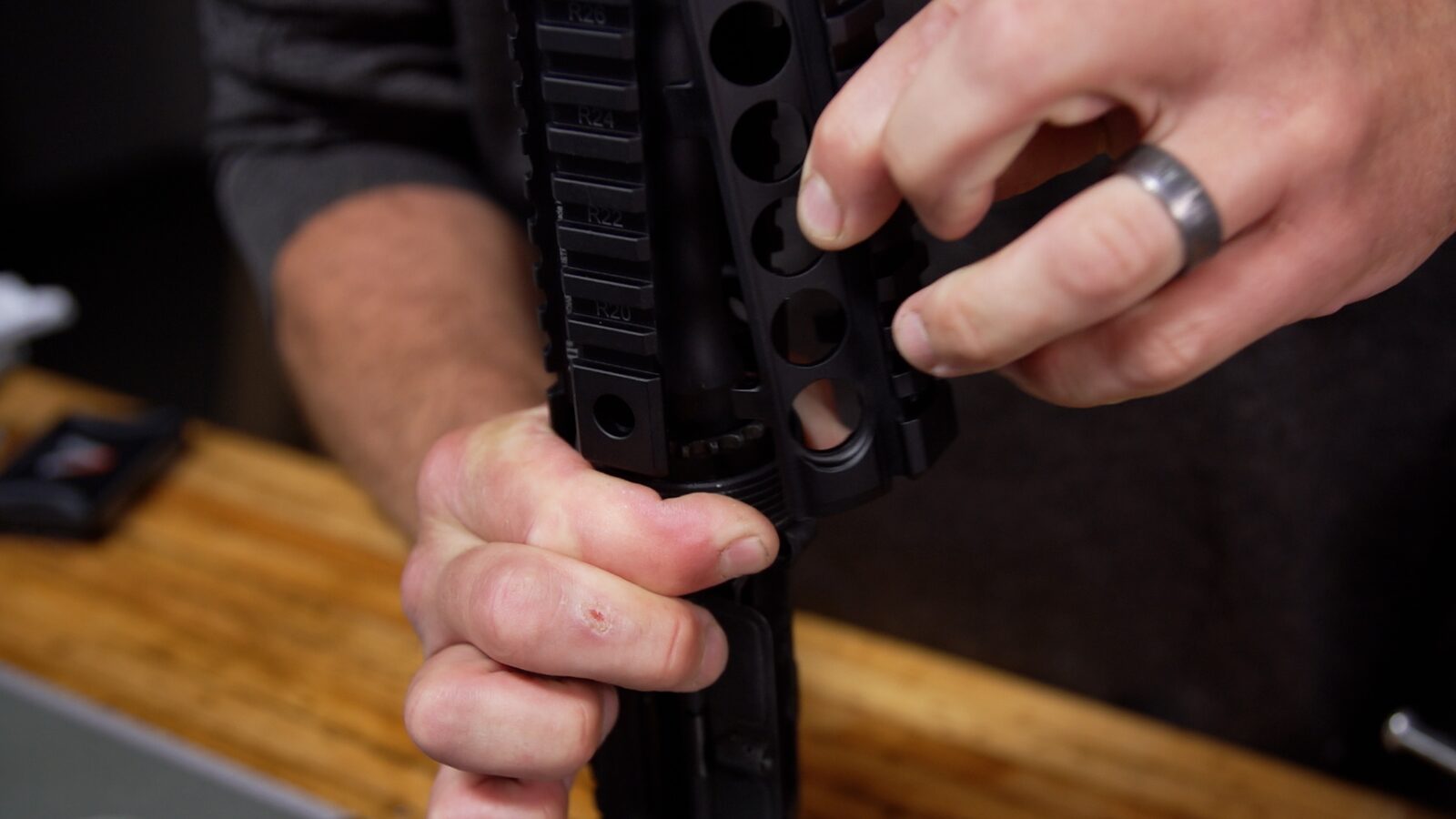
A drop-in handguard is a two-piece forend that locks between the delta ring at the receiver and the handguard cap up front. If you pull the spring-loaded ring back, seat the two halves, and let it snap forward, you get the full retention system. You’ll probably recognize these if you’ve spent any large amount of time with AR-15s over the past thirty years or so.
They have been around since Eugene Stoner’s M16 showed up in the late 1960s. The early rifles ran those triangular, vented polymer guards with heat shields inside. A2s and early M4s kept that same delta-ring setup and switched to the round ribbed guards that most people actually have on their budget rifles today.
The military stuck with them for a long time because they were cheap, tough, and easy to swap in the field. No tools were required for the handguards themselves, which made the training to install and remove them very low-maintenance. That is why the standard-issue M16s and early M4s use a delta-ring system, and why a lot of the cheapest complete rifles on the market today still ship with one.
If the rifle does not already have a delta ring and a handguard cap, a drop-in has nothing to lock into. That’s pretty much the only real pre-requisite to doing an upgrade. Length, polymer vs rail, and your individual budget come after that.
Why They’re Still Worth It

If you fast forward to today, drop-ins are still a massive steal if your rifle has a delta ring set-up on the barrel already. For $20 to $150 you can upgrade your whole rifle’s rail-system and overhaul the look of your build without a gunsmith or any specialized tools in as little as just a few minutes.
They’re also great for those of you living in humid environments that are rocking parkerized barrels that tend to rust. Unlike their free-floated younger brothers, you can pop-them off just as easily as you put them on and have immediate access to your barrel for rust-busting operations. Snap them back on when you’ve got a fresh coat of CLP on the barrel, and your back in action regardless of how austere your conditions might be.
A Magpul MOE drop-in runs about $30 and gives you M-LOK slots for a light and a sling, which is a huge upgrade over the A2 system with it’s vent-holes. If you want even more mounting space, the UTG Pro quad-rail is usually between $45 and $75, and Midwest Industries has a slightly tighter lockup coming in around the $150 mark. Any of these are going to be solid and simple upgrades that allow you to fully modernize your AR-15.
Now, they aren’t free-floated, and the barrel contact with the handguard’s mounting system can nudge the harmonics on your barrel out of whack but unless your rifle’s job is precision over long ranges, this isn’t probably going to be something you notice.
More on that a bit later though.
Let’s talk about the decision making process.
How to Choose the Right Drop-In Handguard
Pick the right tool for the job. Work through this decision matrix in order to pick out the right drop-in handguard for your build.
Step 1: Do you already have a delta ring and handguard cap?
Running a drop-in system means the rifle needs a delta ring and a handguard cap. When you don’t have these two things, you’re not going to be able to run a drop-in system without a little bit of extra work that might not be worth it for you.
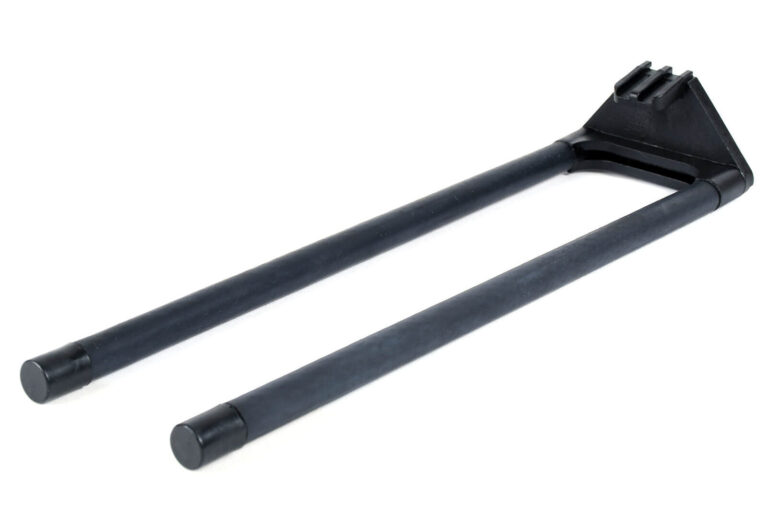
Already set up with a delta ring? You can swap the halves by hand in seconds, but sometimes the spring in the d-ring might fight you. You can test that right now by trying to pull out the two halves, and if you’re having issues getting the handguard off, you might want a Delta Ring Tool just to save yourself from a future wrestling match.
Side-grading from a free-float to a delta ring, or the other way around, is a harder path that needs specific tools. Fortunately, we have this article that can help you get that sorted out.
Step 2: What’s your use case?
Knowing what you want to do with your rifle is going to help you pick the right handguard for the job. Getting this right on the first try is going to save you a ton of cash up-front, because there’s nothing worse than getting your new handguard installed and finding out it’s not compatible with the specific attachment or look that you’re going for.
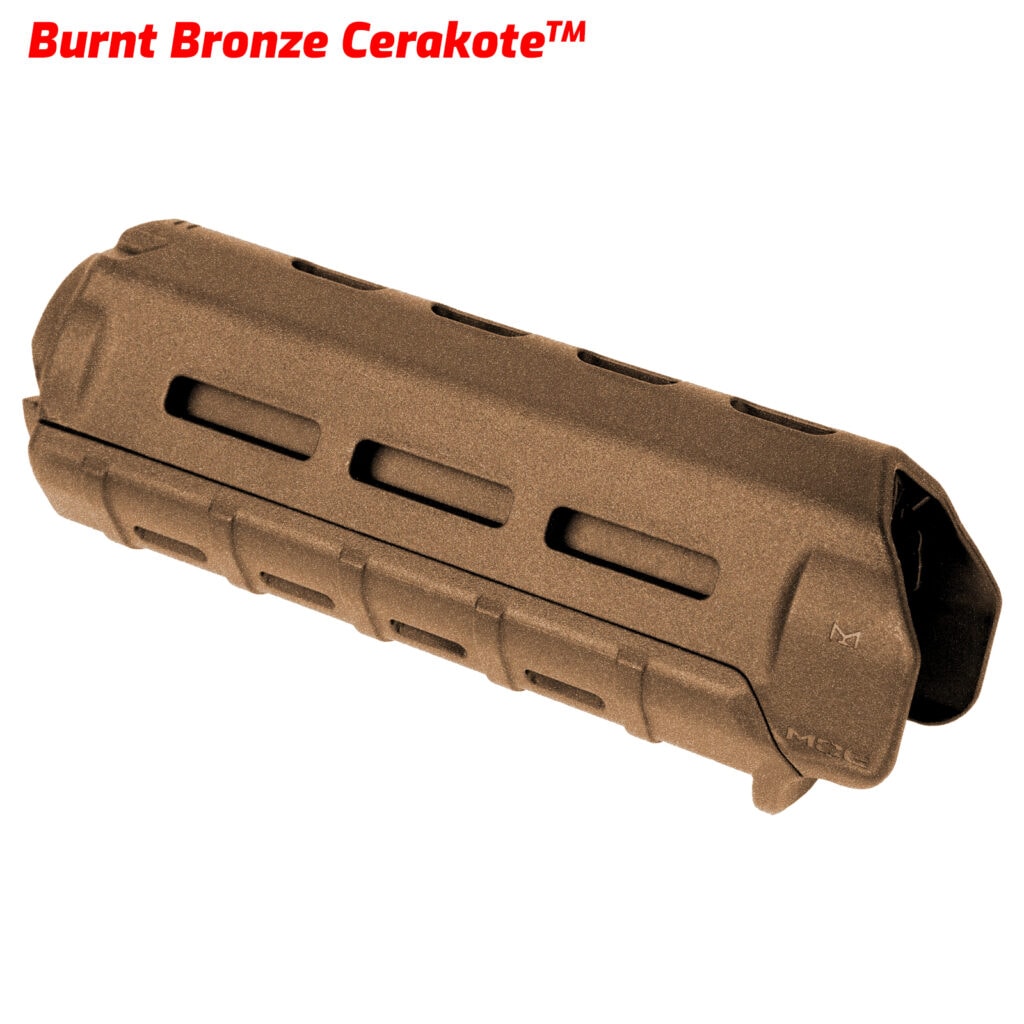
If you’re building a casual range rifle or you’re hunting in ugly terrain without much need for a bunch of excess attachments, then you should grab something lightweight and polymer. For that, we’d recommend looking at something like the Magpul MOE drop-in system. You get M-LOK at 2, 6, and 10 o’clock for a light and a sling, plus it’s cheap and a classic.
Owners keep coming back to the grip on these. The texture beats slick A2 plastic, and the built-in heat shield is what people mention after a few fast magazines. The knock in reviews is bipod load. Lean on it and the polymer flexes. Fine for a light, but a bit soft if you’re trying to load the forend into a bag.
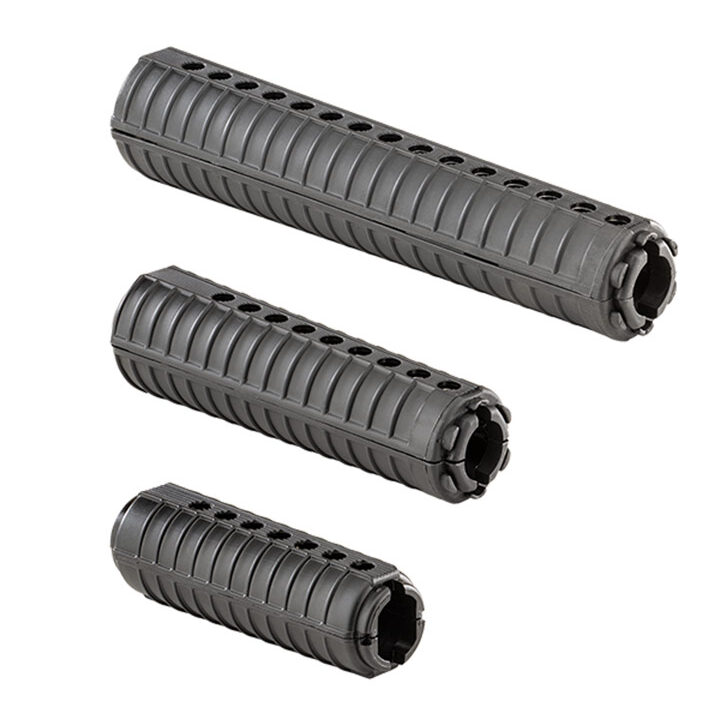
If you’re doing a retro-build and trying to save some cash on that budget-Stoner-cloner, than we’d suggest checking out Luth-AR. They make both the round A2 and the triangular A1 handguards at a decent price, and they’ve been doing it for a very long time. Just keep in mind, if you’re going for one of these retro builds, you might be in a for a little excess rattling that you weren’t quite expecting.
Retro forum guys compare these to Brownells and Linemount a lot. The common note is Luth’s A1 vents have little teeth that cut flex, and the OD is close enough to GI that cloners stop hunting for milsurp. The mixed reviews are on the rifle-length A2 sets. Some feel thinner than the A1s, and a few people pull them because they don’t like how the heat shields are retained.
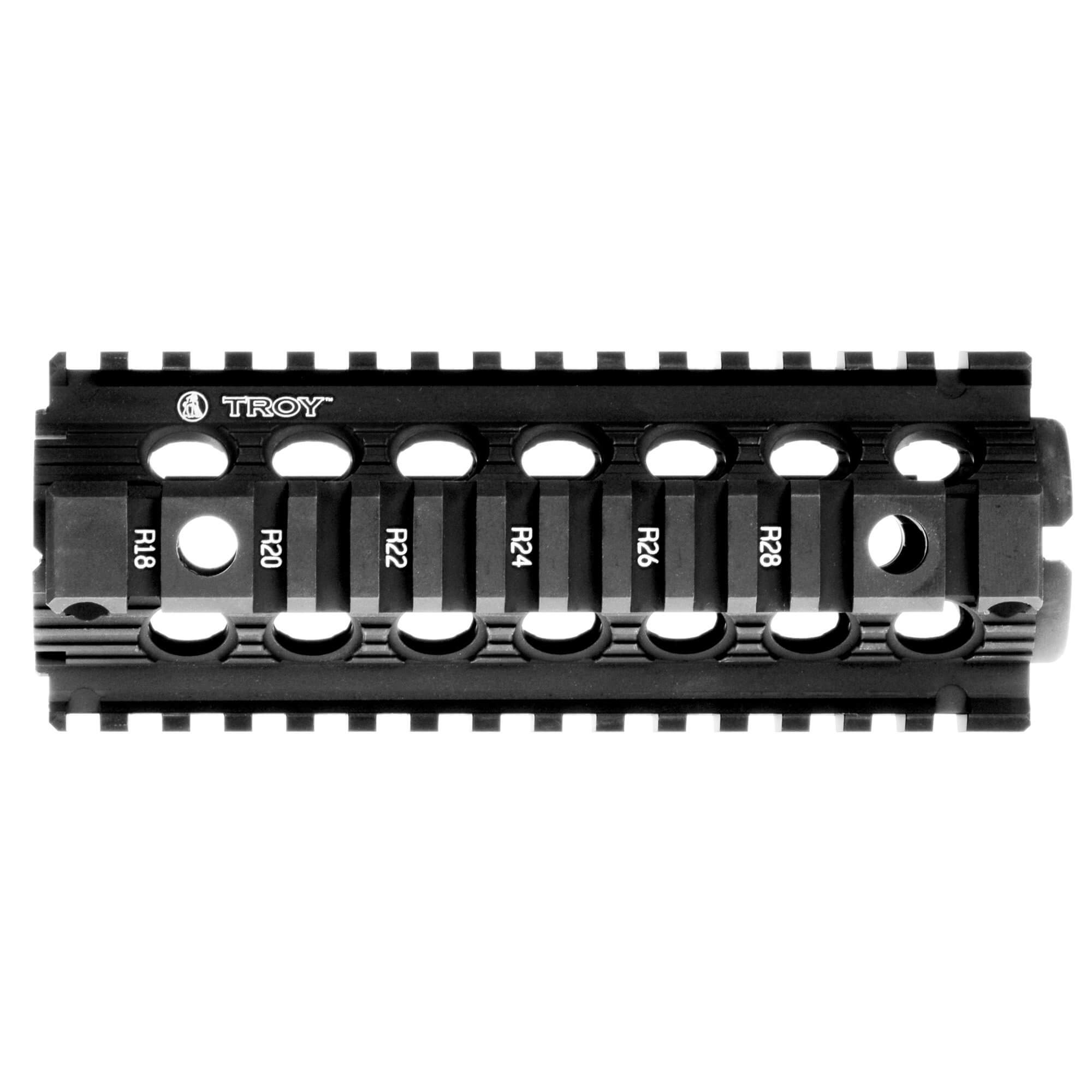
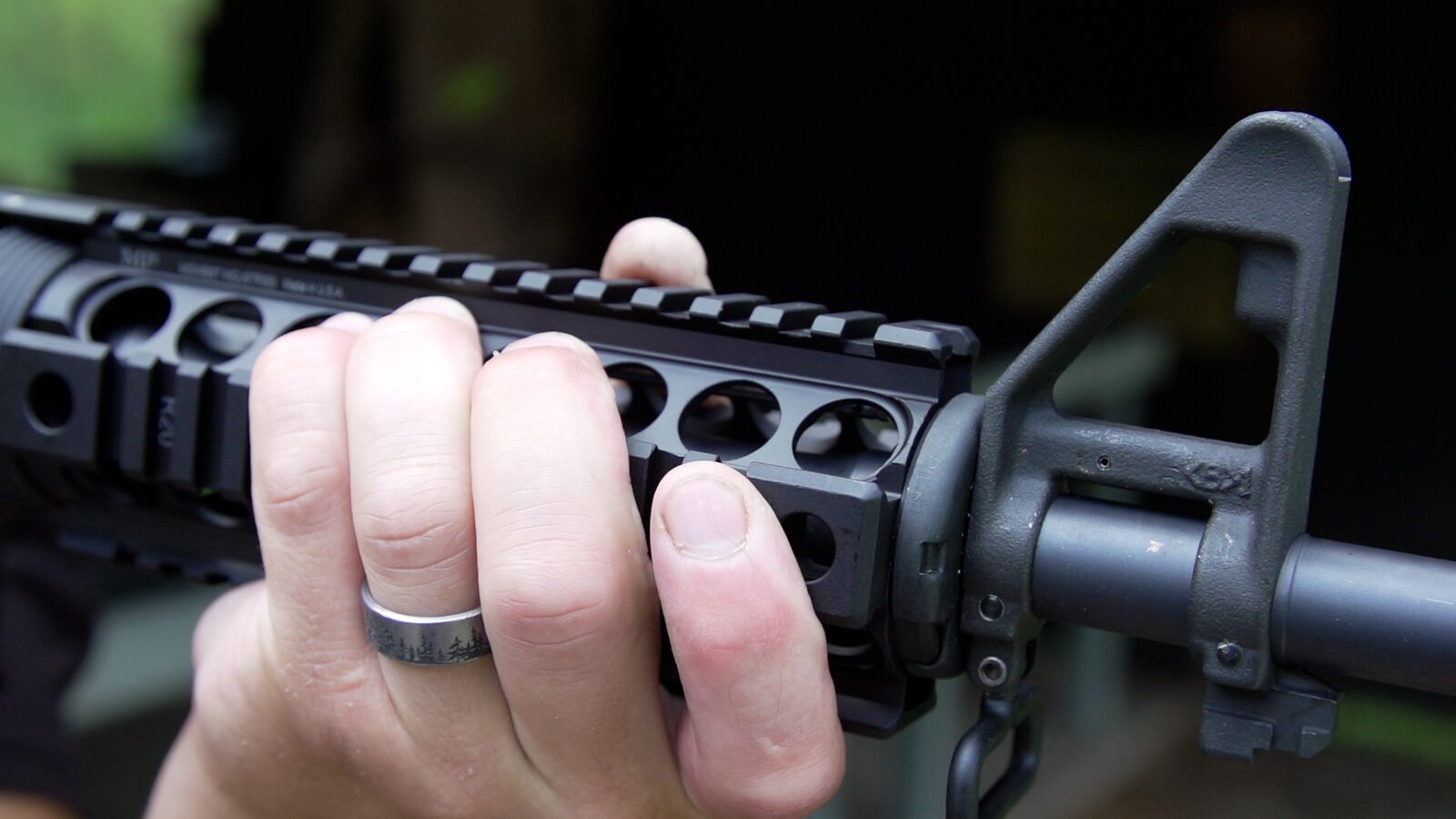
For the duty builds or the home defense setups where you need a lot of additional rail space on your rifle for accessories like lights and lasers, you have options for days and at many price points. You’re dominantly going to be looking at drop-in quad rails or aluminum m-lok systems that are compatible with your delta-ring system, like the one from Troy Industries.
The clamp is what reviews praise. It feels closer to a duty rail than a polymer drop-in, and the built-in QD sockets show up in write-ups more than the Picatinny itself. The complaints are weight and heat. Bare aluminum gets hot without covers, and you feel the extra ounces the first time you pick the rifle up next to an MOE.
Step 3: Match your gas system
Gas system length determines handguard length. Approximate exposed gas tube lengths:
- Pistol-length: about 4 inches
- Carbine-length: about 7 inches
- Mid-length: about 9 inches
- Rifle-length: about 12 inches
Most rifles in this conversation are going to be carbine, mid, or rifle length gas systems. That said, pistol drop-ins do exist, but you’re not going to see them as often. A quick hack you can use is checking the cap while you have your handguards off. Carbine length drop-ins are usually going to want a round handguard cap, whereas your mid-length and rifle-length generally use the triangle length. Your length and cap both have to match.
The exception here is extended carbine rails. Those are still going to fit your carbine gas system, they just run past the front-sight instead of stopping at the cap itself.
If you want to learn more about your gas system and why the length matters, check out this post we put together.
Step 4: Set your budget
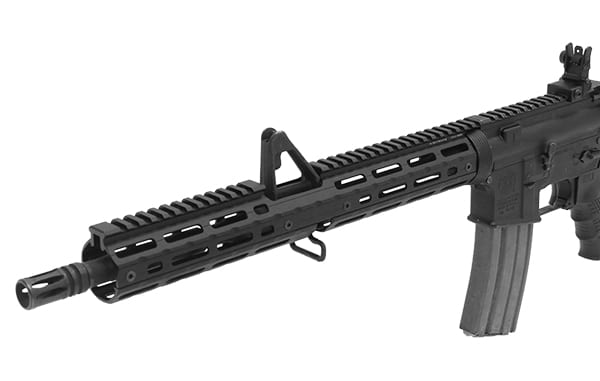
The good thing about drop-in handguards is that they’re usually budget friendly.
Usually, but not always.
A Knights Armament drop-in for a GWoT clone is still going to run you $300, which is not wallet-friendly if you’re a clone-collector trying to make everything 100% accurate. But, if you’re not in that lane, then you can certainly save a lot of cash in this category of handguards.
Polymer systems are usually in the $20-$50 lane with A1/A2 and the Magpul MOE systems usually being the kings of budget. They’re cheap, light, and can still give you a bit of versatility for upgrades. Another bonus here is that the cheaper options are on sale pretty often, because there’s a lot of them on the market at a very good price.
If you’ve got $50 to $100 to spend, you’re in the budget aluminum handguard space. This is where you’re looking at the UTG-Pro drop-in quad rails that give you real mounting real estate. Just make sure you budget for rail covers here, because the cheaper the quads, the better they are grating cheese and your hands.
When you start getting above $100, you’re really in the buy once, cry once territory. Midwest Industries, Troy Industries, Daniel Defense, KAC, they all live in this spot with the top shelf alcohol for your builds. At this point though, you start getting into free-float handguard money, so it’s definitely wroth keeping your options open.
Step 5: Double-check your choice
Alright, you have everything ready to go. The handguard is in your shopping cart. Here’s the four things you need to check on before you click check-out.
- The rifle has a delta ring and the right handguard cap for your selection.
- The guard matches the job from Step 2.
- The length matches the gas system you measured on your rifle.
- The price band from step 4 makes sense for the rifle you’re trying to build.
Remember, measure twice, cut once. The last thing you want is to get hyped up for your new handguard just to have it show up and be an inch too short, or require a fresh handguard cap to match. Or, I mean, maybe you do want that because it gives you an excuse to pick up a new handguard so you can start a second AR build.
Drawbacks and Limitations
Cheap, easy to install, modular. What’s the catch?
It’s more than barrel harmonics.
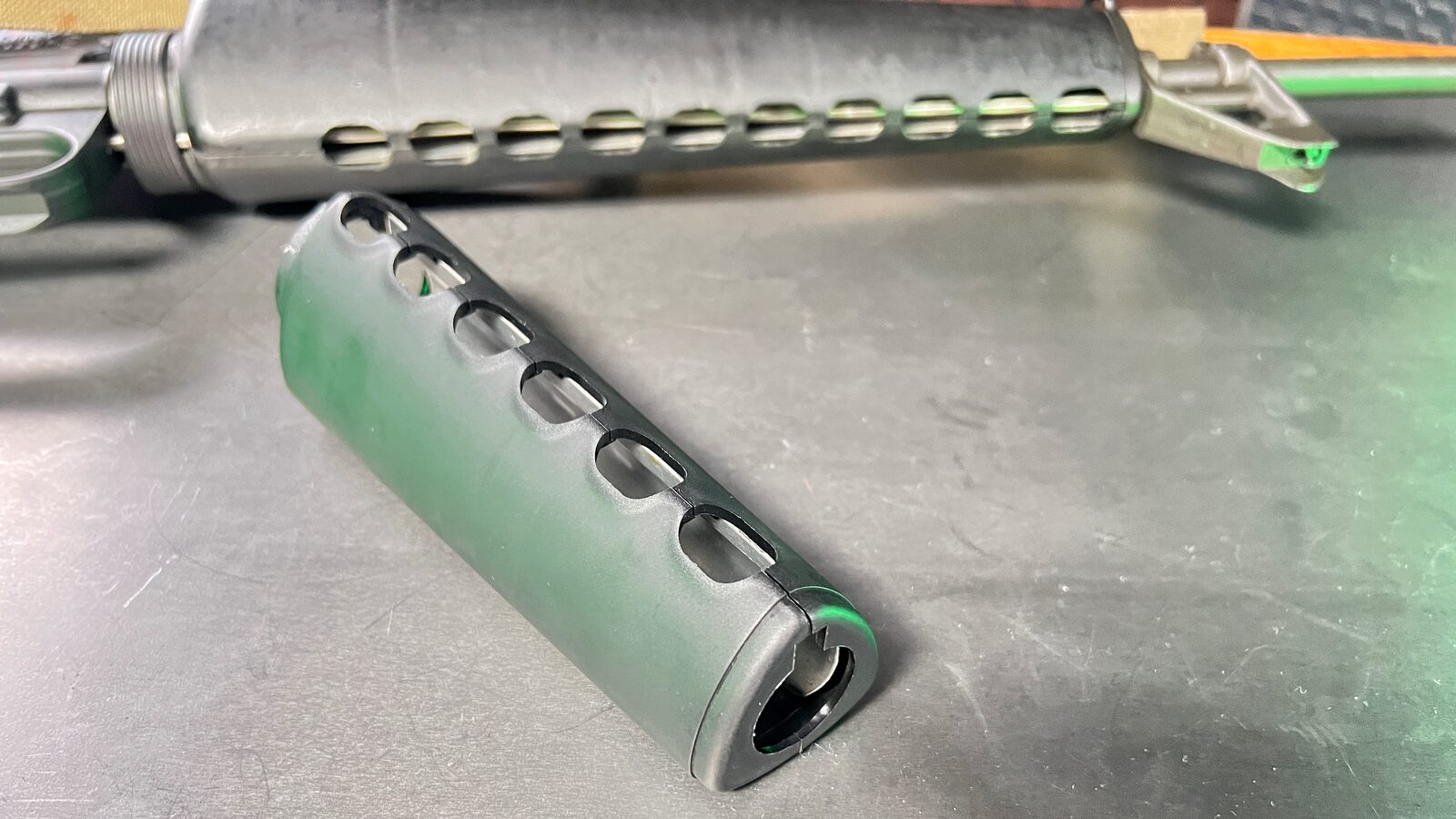
Drop-in handguards are dated hardware. When the AR-15 was designed in the 1960s, troops were not hanging a full tactical suite off of their rifle’s barrel in an attempt to own the night or make an SPR that Garand Thumb would be proud of. The halves of the handguard were held by spring tension in the delta ring, which is just enough to keep a fighting rifle held together for Uncle Sam during the Vietnam era. A laser or an IR unit can walk zero as the ring moves. Load a bipod on there and press the rifle into a barrier, and you’ll see that same shift on your point of impact down range on the target.
Heat is the other thing you need to worry about. Even with a heat shield, a drop-in contacts the barrel at the cap and down at the delta ring. A lot of them are far more enclosed than today’s m-lok skeletonized hand guards, leaving less air-space for the heat to escape. You are likely going to feel more heat on your drop-in system than you would on the better air-cooled free-float handguards.
There’s also the fact that you’re locked into a specific length with a drop-in system, and the length is usually going to be determined by your gas system. There are a few exceptions to this rule with systems that extend past the front-sight post, but you’re certainly not going to be pushing out 3 inches past the end of your barrel to tuck a suppressor with one of these.
None of that means you should pass on one of these systems though. If you’ve already got a delta ring, it does have one major advantage.
Maintenance
Polymer handguards, like the A1, A2, or Magpul MOE, need hot soapy water and a brush. Wash them out, dry them, put them back on the rifle and call it a day. Taking them off also gives you a clean look at the barrel so you can knock off exterior rust without extra tools if you happen to have a parkerized finish instead of a more rust resistant black-nitride one.
Aluminum rails are the same idea, but it’s worth using a light solvent here too if you’re in a more humid environment.
The delta ring is the extra chore that your free-float handguards don’t have. Keep carbon, dirt, and grit out of the inside of the ring if you want to last long-term. Buildup of dirt and grime in this area is why people start reaching for pliers. A delta ring tool is worth having if you pull these often, but a drop of oil on a stiff spring doesn’t hurt.
Clean it. Check it. Keep it tight. Your handguard will thank you for your service for years to come if you just do the maintenance tasks on a regular basis.
We see you, Greg. Yes, you have to clean your gun too.
Do You Need a Drop-In Handguard?
Drop-in handguards are the OG. They’re easy, affordable, and versatile. You may have heard that they destroy your accuracy, or that they’re outdated because they can’t accept accessories.
Those are myths.
For a lot of guys, and for a very long time, they’ve gotten the job done just fine.
They’re not going to match a free-float build for precision, but they will take a light, a sling, and a grip just fine. The simplicity is the strength here, and if you already have a delta-ring, doing a quick swap to a better handguard from the A2 your budget rifle came with is usually the fastest way from 1991 to 2026.
One Last Tip
If there’s anyone that knows the AR-15 platform, it’s the US military. As a special offer for our readers, you can get the Official US Army Manual for AR-15/M4/M16 right now – for free. Click here to snag a copy.